Beyond OpenAI: Why Nigerian Micro-Lenders Are Deploying On-Premises SLMs in 2026

High FX volatility and network jitter in West Africa are forcing local micro-lenders away from US-hosted cloud LLM APIs. In 2026, engineering teams in Lagos are opting for quantized Small Language Models running on local edge infrastructure.
The FX Trap and Cloud API Latency in Yaba
For years, Nigerian FinTech startups relied on central US-east cloud providers to power automated credit risk assessments and conversational underwriting. However, in 2026, two massive bottlenecks have completely reshaped local engineering priorities: unpredictable foreign exchange (FX) rates hitting cloud infrastructure bills and network latency spikes across major Nigerian telecommunication corridors.
When a micro-merchant in Computer Village, Ikeja, applies for a working capital loan, waiting 4.5 seconds for a round-trip API call to a cloud model in Virginia is no longer acceptable. Between regional fiber cuts and packet drops, cloud dependency frequently leads to timed-out checkout flows. Furthermore, paying API fees in USD while earning revenue in Naira has turned AI-driven credit scoring into a margin-killing exercise.
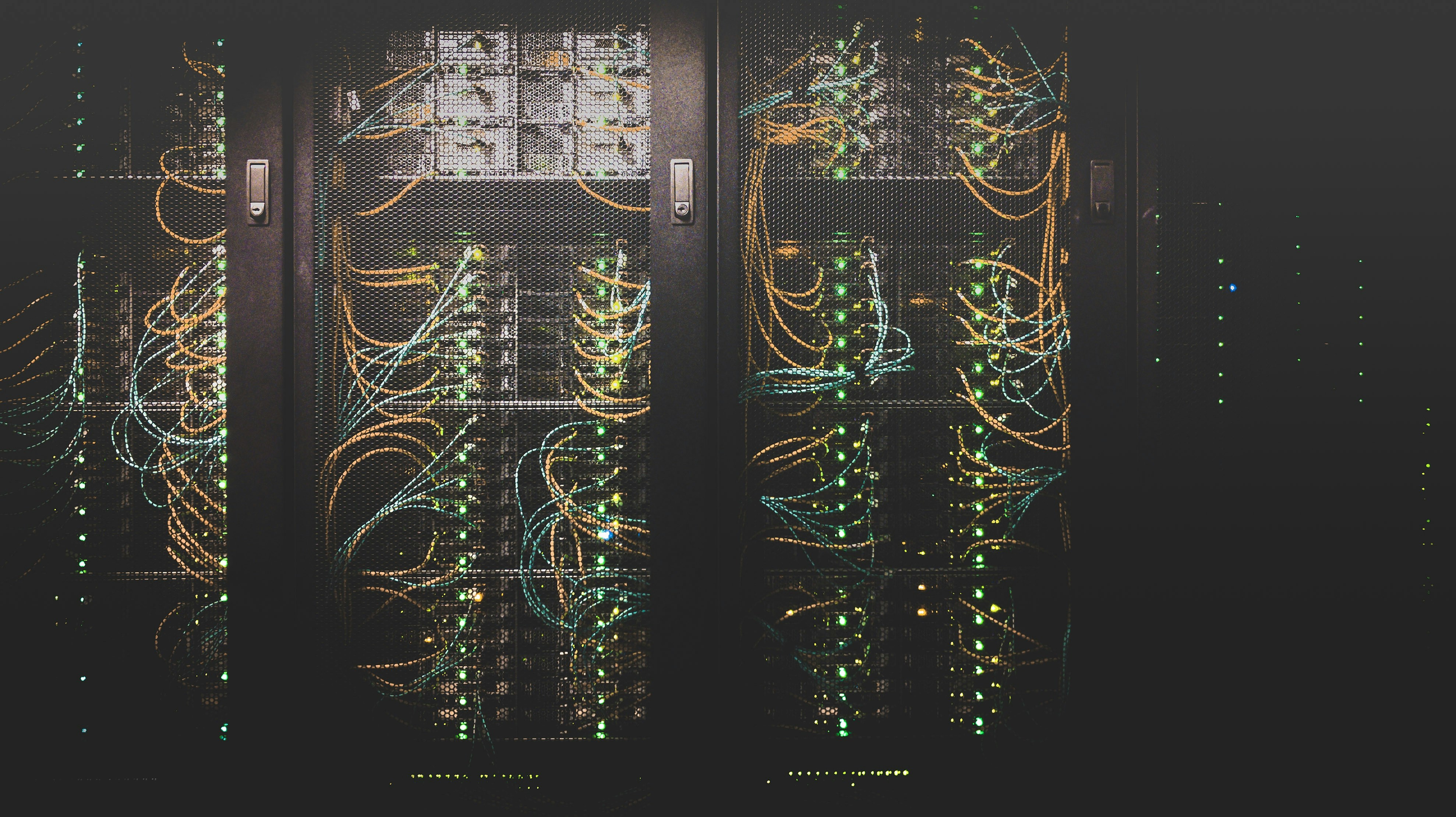
To solve this, leading engineering teams in West Africa are pivoting toward quantized Small Language Models (SLMs) hosted on sovereign local edge nodes within Lagos data centers. By combining local 8-bit quantized models with rapid identity data from our NIN & BVN API Integration for Nigerian FinTech Products: A Developer Guide (2026), local lenders are reducing loan processing latency to sub-200ms while keeping operational overhead in local currency.
Architecture: Edge SLMs for Instant Underwriting
Instead of passing massive multi-modal prompts over high-cost international bandwidth, local engineering teams use localized models like Phi-3 or customized Llama derivatives fine-tuned on Nigerian transaction telemetry, Pidgin phrasing, and local banking metadata.
Key Benefits of the On-Premises SLM Architecture:
- Zero FX Exposure: Edge workloads running in local colocation centers (e.g., Rack Centre or Medallion) are billed natively in NGN.
- Resilience to Telecom Dropouts: By deploying edge runtimes directly adjacent to local bank switches, micro-lenders remain operational even during undersea cable disruptions. Combined with transport-level upgrades discussed in our guide on Tackling Lagos Network Dropouts: Why Nigerian FinTechs Are Swapping WebSockets for WebTransport in 2026, system availability hits 99.99%.
- Strict Data Sovereignty: Identity records and financial histories never leave Nigerian territory, maintaining full compliance with NDPC guidelines.
How-To: Running Quantized Underwriting SLMs with ONNX Runtime
Here is how software engineers can set up a lightweight, quantized local inference engine for credit classification using PyTorch, ONNX, and local runtimes.
Step 1: Export Fine-Tuned Model to ONNX
First, convert your fine-tuned localized SLM from Hugging Face into an optimized ONNX format for edge deployment.
import torch
from transformers import AutoModelForSequenceClassification, AutoTokenizer

model_name = "neobot-tech/nigerian-credit-slm-v1"
tokenizer = AutoTokenizer.from_pretrained(model_name)
model = AutoModelForSequenceClassification.from_pretrained(model_name)

# Dummy input for model tracing
dummy_input = tokenizer("Customer maintains avg balance 150000 NGN in Keffi branch", return_tensors="pt")

torch.onnx.export(
    model,
    (dummy_input["input_ids"], dummy_input["attention_mask"]),
    "credit_underwriter.onnx",
    input_names=["input_ids", "attention_mask"],
    output_names=["risk_score"],
    dynamic_axes={"input_ids": {0: "batch_size"}, "attention_mask": {0: "batch_size"}}
)
Step 2: Inference Execution via ONNX Runtime
Next, run the model using ONNX Runtime on CPU/GPU hybrid edge instances locally hosted in Lagos.
const ort = require('onnxruntime-node');

async function evaluateCreditRisk(inputIds, attentionMask) {
    const session = await ort.InferenceSession.create('./credit_underwriter.onnx');

    const feeds = {
        input_ids: new ort.Tensor('int64', BigInt64Array.from(inputIds), [1, inputIds.length]),
        attention_mask: new ort.Tensor('int64', BigInt64Array.from(attentionMask), [1, attentionMask.length])
    };

    const results = await session.run(feeds);
    return results.risk_score.data;
}
Frequently Asked Questions (FAQ)
1. Are Small Language Models (SLMs) accurate enough for financial underwriting?
Yes. When domain-adapted and fine-tuned specifically on local financial telemetry (such as USSD transaction logs, POS terminal histories, and local credit bureau outputs), 3B to 8B parameter models frequently outperform generalized cloud LLMs while operating at a fraction of the hardware cost.
2. What hardware is required to host these models locally in Nigeria?
Most local engineering teams deploy on standard Linux instances with mid-tier local GPU acceleration (or modern CPU instances with AVX-512 support) in local Lagos data centers. This keeps initial infrastructure setup costs manageable.
3. How does this impact compliance with NDPA (Nigeria Data Protection Act)?
Processing customer financial records locally eliminates cross-border data transfer legal complications, ensuring complete compliance with Central Bank of Nigeria (CBN) and Nigeria Data Protection Commission (NDPC) regulations.
Neobot Engineering Standard
Every system deployed by Neobot Tech incorporates enterprise baseline practices. We continuously audit our database topologies, REST API query paths, and frontend modular bundles to prevent latency spikes and ensure top-tier security posture.
Discussion
Comments Coming Soon
We are currently migrating our discussion engine to a new real-time database schema. Check back shortly to join the conversation.